
Datasets:

prompt stringlengths 9 23.6k ⌀ | completion stringlengths 1 31k | enhanced_prompt stringlengths 154 19.7k ⌀ | enhanced_completion stringlengths 151 169k | evidence_id stringlengths 5 36 ⌀ | license stringclasses 3
values | response_contract stringclasses 1
value | source stringclasses 66
values | task_type stringclasses 3
values | verification_status stringclasses 1
value |
|---|---|---|---|---|---|---|---|---|---|
Give the best evidence-based next step, then state the evidence boundary. Scenario: Cassava on a small diversified farm is at early vegetative growth and has been wilting during the hottest part of the day for several days, and the wilting has worsened slightly over the past few days The field is clay loam and received... | Answer: Afternoon wilting by itself is not reliable evidence of a real water shortage at early vegetative growth. A soil moisture check in the root zone, alongside under half an inch of rain received 9 days back and the coming forecast, should guide the irrigation call. Boundary: These observations do not confirm a dia... | null | **Best Evidence-Based Next Step**
Physically verify soil moisture at the active root zone (approximately 6–12 inches deep) using a soil probe, auger, or the hand-feel method before deciding whether to irrigate.
Do not irrigate based solely on visual wilting. Cassava (*Manihot esculenta*) exhibits strong stomatal reg... | DIAG_920e9c2e640baf343d1b | Original competition dataset | DIRECT_FIRST_BOUNDARY | Original synthetic scenarios with agronomic validity filtering | field_diagnostic_reasoning | SOURCE_BOUNDED |
Give the best evidence-based next step, then state the evidence boundary. Scenario: Two days after a long irrigation run on rice at tillering in a family-run operation, the heavy clay soil is still wet near the surface and a few plants look slightly wilted despite wet soil. The grower is considering another overhead sp... | Answer: Adding more water to soil this wet risks pushing past what the profile can hold. Because drainage has been slow here before, and the surface is still wet after a long irrigation run, a direct root-zone check should come before another overhead sprinkler irrigation cycle. Boundary: These observations do not conf... | null | **Best Evidence-Based Next Step**
**Hold off on irrigation immediately and physically verify root-zone conditions.** The grower should not run the sprinklers before the weekend. Instead, they must scout the field using a probe, auger, or shovel to check the soil moisture profile at the root zone (15–30 cm depth) and ex... | DIAG_4cd5dad017240ce65ddb | Original competition dataset | DIRECT_FIRST_BOUNDARY | Original synthetic scenarios with agronomic validity filtering | field_diagnostic_reasoning | SOURCE_BOUNDED |
Answer this agricultural question directly, then state the evidence boundary. Question: How can Red-rust in mango trees be managed? | Answer: Effective management of Red-rust in mango trees involves using Bordeaux mixture (0.6%) or Copper oxychloride (0.25%) to control the disease. These treatments help reduce the spread of the disease and prevent its impact on mango foliage. Boundary: This is general source-based guidance; confirm current local cond... | null | Red rust (Algal Leaf Spot) in mango trees, caused by the parasitic alga *Cephaleuros virescens*, is managed through an integrated approach combining cultural and chemical controls:
**Cultural Management:**
- **Pruning & Sanitation:** Regularly prune infected branches and twigs, and collect and burn fallen leaves to re... | KISAN_00177 | Apache-2.0 | DIRECT_FIRST_BOUNDARY | KisanVaani/agriculture-qa-english-only | concise_agronomy_qa | SOURCE_BOUNDED |
Answer this agricultural question directly, then state the evidence boundary. Question: What maize variety is drought resistant? | Answer: DroughtGard: This is a genetically modified maize variety that has been engineered to be resistant to drought. Boundary: This is general source-based guidance; confirm current local conditions and appropriate extension guidance before acting. | null | There is no single maize variety that is universally drought-resistant; instead, drought tolerance is a trait found in specific hybrids and open-pollinated varieties developed for particular regions and stress levels. Prominent examples include the **DroughtGard Hybrids** (such as DKC62-97) developed by Bayer (formerly... | KISAN_00410 | Apache-2.0 | DIRECT_FIRST_BOUNDARY | KisanVaani/agriculture-qa-english-only | concise_agronomy_qa | SOURCE_BOUNDED |
Give the best evidence-based next step, then state the evidence boundary. Scenario: Potatoes at early vegetative growth on a research plot show collapsing plants scattered through the block concentrated near a shared fence line in this clay loam field. The grower has not pulled any plants to look at roots or crown tiss... | Answer: Wilting or stunting can come from root disease, crown damage, compaction, waterlogging, or drought, so appearance above ground is not enough. Pull several affected plants to examine roots and crowns, and take a soil moisture reading at depth in the clay loam field first. Take a closer second look within a short... | null | **Best Evidence-Based Next Step**
**Excavate multiple symptomatic plants (including the root ball and surrounding soil) alongside adjacent healthy plants to physically inspect root and crown tissue integrity, while simultaneously probing soil saturation and aeration at depth near the fence line.**
Specifically, the g... | DIAG_2e1fd890856150c8c3d2 | Original competition dataset | DIRECT_FIRST_BOUNDARY | Original synthetic scenarios with agronomic validity filtering | field_diagnostic_reasoning | SOURCE_BOUNDED |
Answer this agricultural question directly, then state the evidence boundary. Question: What conditions should I provide when planting banana suckers for optimal growth? | Answer: For optimal growth of banana suckers, provide well-drained, fertile soil with plenty of organic matter. Ensure the climate is tropical, with temperatures around 27°C to 30°C, and provide ample sunlight to support their growth and development. Boundary: This is general source-based guidance; confirm current loca... | null | To ensure optimal growth when planting banana suckers, you should provide **well-drained, deep, and fertile loamy soil** with a pH between 5.5 and 7.0, situated in a location that receives **full sun** (at least 6–8 hours daily) and is protected from strong winds. The site must maintain **consistent moisture** without ... | KISAN_01693 | Apache-2.0 | DIRECT_FIRST_BOUNDARY | KisanVaani/agriculture-qa-english-only | concise_agronomy_qa | SOURCE_BOUNDED |
Answer from the supplied agricultural passage, then state the evidence boundary. Passage: Internal combustion engines need quite a bit more attention. Change engine oil and all filters. Check engine hours and refer to the manufactures service interval on valve adjustments and other service that may be needed. It would ... | Answer: the manufactures service interval on valve adjustments and other service that may be needed. Boundary: This answer is limited to the supplied passage; confirm current local guidance before applying it. | null | Based on the passage provided, after checking the engine hours, you should refer to the **manufacturer's service interval** for valve adjustments and other services that may be needed.
**Evidence Boundary:**
"Check engine hours and refer to the manufactures service interval on valve adjustments and other service that ... | AGX_301 | MIT | DIRECT_FIRST_BOUNDARY | Ingram, T. (2017). Is Your Irrigation System Ready For the Season? | UNL Water. https://water.unl.edu/article/agricultural-irrigation/your-irrigation-system-ready-season | evidence_grounded_irrigation_qa | SOURCE_BOUNDED |
Give the best evidence-based next step, then state the evidence boundary. Scenario: A grower managing groundnuts at pod fill on a family-run operation asks specifically which pesticide and rate to use against a leaf disease of uncertain cause found scattered randomly across the block in this fine sandy soil field. No i... | Answer: Whether chemical or nonchemical control is appropriate depends entirely on confirming what a leaf disease of uncertain cause actually is and how much of the fine sandy soil field is affected. Without that identification, favoring a nonchemical action such as closer scouting is safer than choosing between specif... | null | **Best Evidence-Based Next Step**
**Do not recommend a specific pesticide or rate at this time.** Instead, advise the grower to halt chemical planning and initiate a formal diagnostic protocol consisting of two actions:
1. **Submit Samples:** Collect symptomatic leaf samples (including the transition zone between hea... | DIAG_977eac0fa6aec58d17e8 | Original competition dataset | DIRECT_FIRST_BOUNDARY | Original synthetic scenarios with agronomic validity filtering | field_diagnostic_reasoning | SOURCE_BOUNDED |
Answer from the supplied agricultural passage, then state the evidence boundary. Passage: Many irrigators apply more water than necessary toward the end of the irrigation season because the crop is using less water per day. The crop is getting more mature and the days are getting shorter and cooler. The average crop wa... | Answer: The crop is getting more mature and the days are getting shorter and cooler. Boundary: This answer is limited to the supplied passage; confirm current local guidance before applying it. | null | Based on the passage provided, the contributing factors to a crop using less water per day late in the season are that **the crop is getting more mature** and **the days are getting shorter and cooler**. These conditions cause the average crop water use rate to drop significantly (from roughly 2.1 inches per week at si... | AGX_469 | MIT | DIRECT_FIRST_BOUNDARY | Melvin, S. (2017). Predicting Late-Season Irrigation Needs. UNL Water. https://water.unl.edu/article/agricultural-irrigation/predicting-late-season-irrigation-needs | evidence_grounded_irrigation_qa | SOURCE_BOUNDED |
Give the best evidence-based next step, then state the evidence boundary. Scenario: A crew sampling soil under maize at early vegetative growth on a research plot plans to combine cores from across the whole gravelly loam field into one bag, including several taken right next to a visibly darker, richer patch. The rest... | Answer: Combining samples from a visibly darker, richer patch with the rest of the field will distort the overall reading. Keep cores from a visibly darker, richer patch in a separate labeled bag, and build the main gravelly loam composite only from the uniform surrounding area. Boundary: These observations do not conf... | null | **Best Evidence-Based Next Step**
**No, this is not an acceptable way to build the sample.** Instruct the crew to stop and immediately segregate the cores taken from the visibly darker, richer patch into a separate, labeled composite bag (e.g., "Anomaly/High OM Zone"). The main composite sample should be built only fr... | DIAG_6219081ca4d659e01476 | Original competition dataset | DIRECT_FIRST_BOUNDARY | Original synthetic scenarios with agronomic validity filtering | field_diagnostic_reasoning | SOURCE_BOUNDED |
Answer this agricultural question directly, then state the evidence boundary. Question: What soil conditions are optimal for apple tree growth? | Answer: Optimal soil conditions for apple tree growth include well-drained, loamy soil with good organic matter content and a pH range between 6.0 and 7.0. Sandy loam or silt loam soils are preferred for apple cultivation, as they offer sufficient fertility, moisture retention, and aeration to support healthy root deve... | null | Optimal soil conditions for apple tree growth include **well-drained, loamy soil** with a **pH between 6.0 and 7.0**. The soil should be deep (at least 2–3 feet) to accommodate root expansion, rich in organic matter, and capable of retaining adequate moisture without becoming waterlogged, as apple trees are highly susc... | KISAN_01482 | Apache-2.0 | DIRECT_FIRST_BOUNDARY | KisanVaani/agriculture-qa-english-only | concise_agronomy_qa | SOURCE_BOUNDED |
Answer from the supplied agricultural passage, then state the evidence boundary. Passage: Option to purchase the farm in future: (c) Repayment requirements of the unrecouped portion of the permanent land improvements made by the lessee if contract is prematurely terminated is often view as a form of security from farm ... | Answer: by amortizing the dollar investment over the period of the contract at the current interest rate. Boundary: This answer is limited to the supplied passage; confirm current local guidance before applying it. | null | Based on the passage provided, a schedule of repayment is constructed by **amortizing the dollar investment over the period of the contract at the current interest rate**.
**Evidence Boundary:**
The evidence is contained entirely within the second sentence of the passage: "A schedule of repayment is constructed by amo... | AGX_1181493 | MIT | DIRECT_FIRST_BOUNDARY | Kelley, L. (2009c). Irrigation Fact Sheet #9 - Michigan Large Volume Water Use Requirements. https://www.canr.msu.edu/uploads/235/67987/lyndon/9largewaterwith.pdf | evidence_grounded_irrigation_qa | SOURCE_BOUNDED |
Answer this agricultural question directly, then state the evidence boundary. Question: How are growth regulators applied in citrus farming, and what purposes do they serve? | Answer: Growth regulators in citrus farming are applied to control fruit size, induce flowering, or manage tree vigor. Boundary: This is general source-based guidance; confirm current local conditions and appropriate extension guidance before acting. | null | In citrus farming, growth regulators are primarily applied as foliar sprays targeted at the canopy and fruit, timed to specific phenological stages like bloom or pre-harvest. Alternative methods include trunk injections, soil drenching, and post-harvest dips. They serve several critical purposes:
* **Preventing Pre-h... | KISAN_01613 | Apache-2.0 | DIRECT_FIRST_BOUNDARY | KisanVaani/agriculture-qa-english-only | concise_agronomy_qa | SOURCE_BOUNDED |
Answer this agricultural question directly, then state the evidence boundary. Question: How can you identify Powdery mildew in mango trees? | Answer: Powdery mildew in mango trees can be identified by the presence of white powdery fungal growth on leaves, stalks of panicles, flowers, and young fruits. This growth is a characteristic symptom of the disease. Additionally, affected flowers and fruits may drop prematurely, leading to a reduction in the crop load... | null | You can identify powdery mildew in mango trees by looking for a distinctive white to grayish, flour-like fungal growth primarily on young leaves, flower panicles, and tender shoots. Early symptoms often appear as small, isolated white patches that rapidly expand to cover large surfaces; heavily infected flower panicles... | KISAN_00432 | Apache-2.0 | DIRECT_FIRST_BOUNDARY | KisanVaani/agriculture-qa-english-only | concise_agronomy_qa | SOURCE_BOUNDED |
Answer this agricultural question directly, then state the evidence boundary. Question: why is soil health vital? | Answer: Soil health is critical to crop growth and productivity, as it provides the necessary nutrients and support for plants to thrive. Boundary: This is general source-based guidance; confirm current local conditions and appropriate extension guidance before acting. | null | Soil health is vital because it serves as the foundational engine for sustainable agriculture, directly determining crop productivity, food security, and ecosystem resilience. Healthy soil acts as a living system that efficiently cycles nutrients and water to plants, reducing the need for synthetic fertilizers and irri... | KISAN_01460 | Apache-2.0 | DIRECT_FIRST_BOUNDARY | KisanVaani/agriculture-qa-english-only | concise_agronomy_qa | SOURCE_BOUNDED |
Answer from the supplied agricultural passage, then state the evidence boundary. Passage: Check for proper operation by making sure there is not any water squirting from the side of any regulators. This is a sign that the rubber bladder has failed. Keep in mind that sprinklers and pressure regulators do have a life spa... | Answer: sprinklers and pressure regulators. Boundary: This answer is limited to the supplied passage; confirm current local guidance before applying it. | null | Based on the passage provided, if your irrigation system is approaching 10 years old, you should take a closer look at the **sprinklers and pressure regulators**.
The text explicitly states, "Keep in mind that sprinklers and pressure regulators do have a life span. If your system is approaching 10 years old you might ... | AGX_286 | MIT | DIRECT_FIRST_BOUNDARY | Ingram, T. (2017). Is Your Irrigation System Ready For the Season? | UNL Water. https://water.unl.edu/article/agricultural-irrigation/your-irrigation-system-ready-season | evidence_grounded_irrigation_qa | SOURCE_BOUNDED |
Give the best evidence-based next step, then state the evidence boundary. Scenario: While checked at a handful of random spots, the grower found a fungal-looking leaf spot on groundnuts at flowering in a research plot and is now debating whether to spray the whole well-drained loam field this week. No formal scouting c... | Answer: A few random checks are not representative of the whole field. A broader scouting pass across the well-drained loam field, with counts compared to a local threshold and natural enemy presence noted, should come first. Take another look at the same spot before the week is out, before drawing a firm conclusion. B... | null | **Best Evidence-Based Next Step**
Withhold the field-wide fungicide spray and immediately initiate formal, structured in-canopy scouting. Do not base the decision on a "handful of random spots."
Implement the following protocol before considering an application:
1. **Sample Structure:** Select 5–10 representative lo... | DIAG_0a11d05d43ca4024bfd6 | Original competition dataset | DIRECT_FIRST_BOUNDARY | Original synthetic scenarios with agronomic validity filtering | field_diagnostic_reasoning | SOURCE_BOUNDED |
Give the best evidence-based next step, then state the evidence boundary. Scenario: A crew sampling soil under grapes at early fruit set on a family-run operation plans to combine cores from across the whole compacted clay loam field into one bag, including several taken right next to a low wet spot. The rest of the fi... | Answer: Combining samples from a low wet spot with the rest of the field will distort the overall reading. The area near a low wet spot should be tested on its own, with the main composite built from cores across the uniform compacted clay loam ground. Boundary: These observations do not confirm a diagnosis or treatmen... | null | **Best Evidence-Based Next Step**
**Do not combine the cores from the low wet spot with the general field cores.** Segregate the sampling into two distinct management zones: submit one composite bag for the uniform area and a separate bag specifically for the low wet spot (if that area is to be managed or remediated). ... | DIAG_5e3bc1583c49abb7ab19 | Original competition dataset | DIRECT_FIRST_BOUNDARY | Original synthetic scenarios with agronomic validity filtering | field_diagnostic_reasoning | SOURCE_BOUNDED |
Answer this agricultural question directly, then state the evidence boundary. Question: why should farmers use farmyard manure in their garden. | Answer: helps improve the structure and texture of the soil. It contains a range of nutrients and microorganisms that can break down and decompose to provide nutrients and improve soil health. Boundary: This is general source-based guidance; confirm current local conditions and appropriate extension guidance before act... | null | Farmers should use farmyard manure because it acts as a comprehensive soil amendment that simultaneously improves soil structure, enhances water retention, and provides a slow-release source of essential macro- and micronutrients (such as nitrogen, phosphorus, and potassium) while boosting beneficial microbial activity... | KISAN_00043 | Apache-2.0 | DIRECT_FIRST_BOUNDARY | KisanVaani/agriculture-qa-english-only | concise_agronomy_qa | SOURCE_BOUNDED |
Answer this agricultural question directly, then state the evidence boundary. Question: What are the main pathogens responsible for causing gummosis in citrus trees? | Answer: The main pathogens responsible for causing gummosis in citrus trees are Phytophthora parasitica, P. palmivora, and P. citrophthora. These pathogens thrive in conditions of prolonged trunk contact with water, such as flood irrigation, waterlogged areas, and heavy soils. They infect citrus trees, leading to chara... | null | The main pathogens responsible for causing gummosis in citrus trees are species of the oomycete genus **_Phytophthora_**, specifically **_Phytophthora citrophthora_**, **_Phytophthora nicotianae_** (also known as _P. parasitica_), and **_Phytophthora palmivora_**. While gummosis is primarily a symptom of infection by t... | KISAN_01235 | Apache-2.0 | DIRECT_FIRST_BOUNDARY | KisanVaani/agriculture-qa-english-only | concise_agronomy_qa | SOURCE_BOUNDED |
Answer from the supplied agricultural passage, then state the evidence boundary. Passage: Internal combustion engines need quite a bit more attention. Change engine oil and all filters. Check engine hours and refer to the manufactures service interval on valve adjustments and other service that may be needed. It would ... | Answer: Nebraska Extension App IrrigatePump. Boundary: This answer is limited to the supplied passage; confirm current local guidance before applying it. | null | Based on the passage provided, you can use the **Nebraska Extension App IrrigatePump** to see where your well (and by extension, your pump) stacks up against the Nebraska Pumping Plant Criteria. The text explicitly states that running this specific app will provide an idea of the efficiency of both the power unit and t... | AGX_302 | MIT | DIRECT_FIRST_BOUNDARY | Ingram, T. (2017). Is Your Irrigation System Ready For the Season? | UNL Water. https://water.unl.edu/article/agricultural-irrigation/your-irrigation-system-ready-season | evidence_grounded_irrigation_qa | SOURCE_BOUNDED |
Answer this agricultural question directly, then state the evidence boundary. Question: At what stage should grapes be harvested to produce quality wine? | Answer: Grapes should be harvested for wine production when they reach optimal sugar levels and flavor maturity. This assessment requires consistent sampling and analysis of grape juice. Harvest timing is influenced by factors such as grape variety and the desired characteristics of the resulting wine. Boundary: This i... | null | Grapes should be harvested at the stage of **physiological ripeness** (also known as full maturity), which occurs when there is an optimal balance between sugar accumulation (measured as Brix), acid degradation (measured as pH and titratable acidity), and the development of flavor compounds and tannin maturity in the s... | KISAN_00681 | Apache-2.0 | DIRECT_FIRST_BOUNDARY | KisanVaani/agriculture-qa-english-only | concise_agronomy_qa | SOURCE_BOUNDED |
Answer this agricultural question directly, then state the evidence boundary. Question: Is it necessary to prune tomato plants, and if so, how should it be done? | Answer: Pruning tomato plants helps improve airflow, reduce disease risk, and promote fruit production. Remove suckers (side shoots) that develop in the leaf axils below the first flower cluster, leaving one or two main stems to grow. Pinch off excessive foliage to allow sunlight to reach developing fruit and facilitat... | null | Whether it is necessary to prune tomato plants depends entirely on the variety you are growing. **Indeterminate** (vining) varieties generally require pruning to improve air circulation, reduce disease risk, and direct energy toward fruit production rather than excessive foliage. In contrast, **determinate** (bush) var... | KISAN_00702 | Apache-2.0 | DIRECT_FIRST_BOUNDARY | KisanVaani/agriculture-qa-english-only | concise_agronomy_qa | SOURCE_BOUNDED |
Give the best evidence-based next step, then state the evidence boundary. Scenario: Sorghum at mid-vegetative growth on a smallholder plot shows small brown spots on the foliage near the field entrance, and the grower has only looked at one affected plant so far. The well-drained loam field followed fallow ground, and ... | Answer: A confident diagnosis is not yet possible from what has been observed at mid-vegetative growth. What is missing is a progression check over the past several days and a look at additional plants near that same area, plus a root inspection, before any treatment is considered. Boundary: These observations do not c... | null | **Best Evidence-Based Next Step**
Perform a systematic field scout to determine the spatial distribution and incidence of symptoms across the plot. The grower should examine a minimum of 20–30 additional plants using a "W" or zig-zag transect pattern, specifically comparing the severity of symptoms at the field entranc... | DIAG_c863bfd807e6af5099b8 | Original competition dataset | DIRECT_FIRST_BOUNDARY | Original synthetic scenarios with agronomic validity filtering | field_diagnostic_reasoning | SOURCE_BOUNDED |
Give the best evidence-based next step, then state the evidence boundary. Scenario: Maize at rapid stem elongation on a family-run operation shows stunted growth in several rows compared to a similar field nearby. The last soil test on this silty clay field was about 4 years ago, and the grower is ready to buy fertiliz... | Answer: No fertilizer or lime rate should be suggested at this point. What is needed is a fresh sample from the silty clay field interpreted for this crop, given that the existing test is 4 years old. Compare this against a fresh visit before the week is out, to see if conditions have shifted. Boundary: These observati... | null | **Best Evidence-Based Next Step**
**Do not purchase or apply fertilizer or lime today.** Instead, the grower should immediately collect comparative plant tissue samples from both the stunted rows and adjacent healthy areas for laboratory analysis, alongside performing a physical root-zone inspection.
1. **Comparative... | DIAG_924e2c0add44b06bd4a8 | Original competition dataset | DIRECT_FIRST_BOUNDARY | Original synthetic scenarios with agronomic validity filtering | field_diagnostic_reasoning | SOURCE_BOUNDED |
Answer from the supplied agricultural passage, then state the evidence boundary. Passage: Among the traditional crops, commercial corn and alfalfa have shown the greatest economic advantage to irrigation. Small grains and soybeans have offered some of the lowest returns from added investment in irrigation. Changes in c... | Answer: Small grains and soybeans. Boundary: This answer is limited to the supplied passage; confirm current local guidance before applying it. | null | Based on the passage provided, **small grains and soybeans** offer the worst economic advantage to irrigation. The text explicitly states that these crops "have offered some of the lowest returns from added investment in irrigation," contrasting them with corn and alfalfa, which showed the greatest advantage.
**Eviden... | AGX_316dd3f1c10a4d82af8850dd911410be | MIT | DIRECT_FIRST_BOUNDARY | Kelley, L. (2022). Irrigation Fact Sheet #11- Checklist for Planning Irrigation Systems. https://www.canr.msu.edu/irrigation/upoads/files/11ChecklistForPlanningIrrigationSystems08.22.pdf | evidence_grounded_irrigation_qa | SOURCE_BOUNDED |
Answer this agricultural question directly, then state the evidence boundary. Question: what are some of the signs of cutworms. | Answer: damaged stems and cut plants. Boundary: This is general source-based guidance; confirm current local conditions and appropriate extension guidance before acting. | null | Signs of cutworm damage include young seedlings being severed at or just below the soil surface, often appearing as if they have been cleanly cut with scissors. You may find the severed plants lying on the ground, sometimes with the tops dragged into the soil by the pest. Other indicators include irregular holes in lea... | KISAN_00558 | Apache-2.0 | DIRECT_FIRST_BOUNDARY | KisanVaani/agriculture-qa-english-only | concise_agronomy_qa | SOURCE_BOUNDED |
Give the best evidence-based next step, then state the evidence boundary. Scenario: Rice at flowering on a contract-grown field has old scarring on the foliage noticed on a few plants near the field entrance in this gravelly loam field. The grower is unsure whether the damage is fresh or leftover from an earlier event,... | Answer: Treating now, before the organism is confirmed, risks wasting the application entirely. Identify the pest or damage source, confirm whether it matches fresh injury rather than old scarring, and assess how much of the gravelly loam field is affected before considering control. Look again at the same plants later... | null | **Best Evidence-Based Next Step**
**Do not spray.** The immediate next step is to conduct a targeted scouting protocol to differentiate between historical damage, mechanical injury, abiotic stress, and active biotic pressure, followed by consultation with the contract provider.
**Action Plan:**
1. **Verify Activity:*... | DIAG_4bd5ede4da5fcc338637 | Original competition dataset | DIRECT_FIRST_BOUNDARY | Original synthetic scenarios with agronomic validity filtering | field_diagnostic_reasoning | SOURCE_BOUNDED |
Answer this agricultural question directly, then state the evidence boundary. Question: Name the pest control management practices. | Answer: Chemical (pesticides), biological (biocontrol), mechanical (tillage), and cultural practices are used. Boundary: This is general source-based guidance; confirm current local conditions and appropriate extension guidance before acting. | null | The primary pest control management practices, collectively known as Integrated Pest Management (IPM), include:
1. **Cultural Control**: Modifying the environment or farming practices to reduce pest establishment (e.g., crop rotation, selecting resistant varieties, adjusting planting dates, and sanitation).
2. **Bio... | KISAN_00986 | Apache-2.0 | DIRECT_FIRST_BOUNDARY | KisanVaani/agriculture-qa-english-only | concise_agronomy_qa | SOURCE_BOUNDED |
Give the best evidence-based next step, then state the evidence boundary. Scenario: A crew sampling soil under sorghum at canopy closure on a commercial production block plans to combine cores from across the whole compacted clay loam field into one bag, including several taken right next to a low wet spot. The rest of... | Answer: Combining samples from a low wet spot with the rest of the field will distort the overall reading. Sample that unusual area separately and build the main sample from multiple cores across the uniform compacted clay loam area only, keeping the two labeled apart. Note the current condition closely later this week... | null | **Best Evidence-Based Next Step**
**Do not combine the cores from the low wet spot with the general field composite.** Stop the crew and instruct them to sample the low wet spot as a separate management zone (a separate bag), building the main composite sample solely from cores taken across the uniform compacted clay l... | DIAG_5195a51b784486507cd2 | Original competition dataset | DIRECT_FIRST_BOUNDARY | Original synthetic scenarios with agronomic validity filtering | field_diagnostic_reasoning | SOURCE_BOUNDED |
Answer this agricultural question directly, then state the evidence boundary. Question: what type of soil can cause cassava plant to die prematurely. | Answer: soil with high salinity or acidity, can cause the plants to dry out and die prematurely. Boundary: This is general source-based guidance; confirm current local conditions and appropriate extension guidance before acting. | null | Cassava plants can die prematurely or suffer severe stunting in **waterlogged, poorly drained soils** (such as heavy clay) and **highly saline or sodic soils**.
While cassava is known for its tolerance to poor, acidic, and low-fertility soils, it is extremely sensitive to excess moisture. Heavy clay soils that retain ... | KISAN_01105 | Apache-2.0 | DIRECT_FIRST_BOUNDARY | KisanVaani/agriculture-qa-english-only | concise_agronomy_qa | SOURCE_BOUNDED |
Answer this agricultural question directly, then state the evidence boundary. Question: what is CBB | Answer: Cassava Bacterial Blight (CBB) is a bacterial disease that affects cassava plants. Boundary: This is general source-based guidance; confirm current local conditions and appropriate extension guidance before acting. | null | **Answer:**
In agriculture, **CBB** most commonly stands for **Common Bacterial Blight**, a serious bacterial disease affecting bean crops (*Phaseolus vulgaris*). It is caused by the bacterium *Xanthomonas axonopodis* pv. *phaseoli* (also known as *Xanthomonas campestris* pv. *phaseoli*). The disease manifests as water... | KISAN_00378 | Apache-2.0 | DIRECT_FIRST_BOUNDARY | KisanVaani/agriculture-qa-english-only | concise_agronomy_qa | SOURCE_BOUNDED |
Answer this agricultural question directly, then state the evidence boundary. Question: which beetle feed on the leaves of bean plants, causing holes and defoliation, which can reduce yields. | Answer: Bean leaf beetles (Cerotoma trifurcata). Boundary: This is general source-based guidance; confirm current local conditions and appropriate extension guidance before acting. | null | The **Mexican bean beetle** (*Epilachna varivestis*) is the primary beetle that feeds on the leaves of bean plants, causing characteristic skeletonization (holes between veins) and defoliation that can significantly reduce yields. While other beetles like the bean leaf beetle (*Cerotoma trifurcata*) also damage beans, ... | KISAN_00979 | Apache-2.0 | DIRECT_FIRST_BOUNDARY | KisanVaani/agriculture-qa-english-only | concise_agronomy_qa | SOURCE_BOUNDED |
Answer this agricultural question directly, then state the evidence boundary. Question: How does Scab/Verucosis spread within citrus orchards? | Answer: Scab/Verucosis spreads within citrus orchards through various means. The pathogen survives in the off-season as ascospores and spreads through conidia. These conidia are produced in acervuli and facilitate the dissemination of the disease within citrus orchards, leading to widespread infection and the manifesta... | null | Citrus scab (caused by the fungus *Elsinoë fawcettii*) spreads within orchards primarily through **water splash and wind-driven rain**, which dislodge spores from existing lesions on leaves, twigs, and fruit and deposit them onto new, susceptible young tissue. The disease cycle relies heavily on **infected plant debris... | KISAN_00720 | Apache-2.0 | DIRECT_FIRST_BOUNDARY | KisanVaani/agriculture-qa-english-only | concise_agronomy_qa | SOURCE_BOUNDED |
Answer this agricultural question directly, then state the evidence boundary. Question: name some cultural practices that farmers can use to control cutworms | Answer: removing weeds and plant debris from the field and cultivating the soil before planting can help to reduce cutworm populations. Boundary: This is general source-based guidance; confirm current local conditions and appropriate extension guidance before acting. | null | Farmers can control cutworms using several cultural practices, including:
* **Tillage and Cultivation:** Plowing or discing fields 10–14 days before planting to expose larvae to predators and desiccation, and cultivating soil around young plants to disrupt feeding.
* **Weed Management:** Eliminating weeds (especia... | KISAN_00015 | Apache-2.0 | DIRECT_FIRST_BOUNDARY | KisanVaani/agriculture-qa-english-only | concise_agronomy_qa | SOURCE_BOUNDED |
Answer this agricultural question directly, then state the evidence boundary. Question: what is the use of living organism in the soil. | Answer: Soil organisms, such as earthworms, termites, and nematodes, play a vital role in improving the soil structure. They help to break down organic matter, loosen compacted soil, and improve soil porosity, allowing air, water, and nutrients to move more freely through the soil. Boundary: This is general source-base... | null | Living organisms in the soil are essential for maintaining soil health and supporting plant growth through several critical functions: they decompose organic matter to release nutrients (nutrient cycling), improve soil structure and aeration via burrowing and aggregation, suppress plant diseases and pests, enhance wate... | KISAN_00461 | Apache-2.0 | DIRECT_FIRST_BOUNDARY | KisanVaani/agriculture-qa-english-only | concise_agronomy_qa | SOURCE_BOUNDED |
Give the best evidence-based next step, then state the evidence boundary. Scenario: Grapes at early vegetative growth on a small diversified farm show stunted growth in several rows compared to a similar field nearby. The last soil test on this heavy clay field was about 5 years ago, and the grower is ready to buy fert... | Answer: A rate decision cannot be made responsibly from appearance alone. With a 5-year-old test on file, the grower should pull a new sample from the heavy clay field and wait for interpreted results before applying fertilizer or lime. Walk the area again later this week, so the next comparison is easy. Boundary: Thes... | null | **Best Evidence-Based Next Step**
**Withhold all fertilizer and lime applications immediately.** Do not estimate application rates based on visual symptoms. Instead, take the following diagnostic steps:
1. **Conduct a Physical Root Zone Inspection:** Dig up stunted vines and compare them to healthy vines from the ne... | DIAG_1c49f8c256f954132b88 | Original competition dataset | DIRECT_FIRST_BOUNDARY | Original synthetic scenarios with agronomic validity filtering | field_diagnostic_reasoning | SOURCE_BOUNDED |
Answer from the supplied agricultural passage, then state the evidence boundary. Passage: (8) Check center pivot sprinkler patterns: With water up to pressure, check sprinkler patterns. This can be easily done on bare earth or when crops are small. Look for sprinklers that have smaller wetted patterns than others. Plug... | Answer: Check center pivot sprinkler patterns. Boundary: This answer is limited to the supplied passage; confirm current local guidance before applying it. | null | Based on the provided passage, when handling sprinkler systems during an irrigation inspection, you should follow these steps:
1. **Check Sprinkler Patterns:** Ensure the water is up to pressure and inspect the patterns. This is best done on bare earth or when crops are small.
2. **Identify Irregularities:** Look fo... | AGX_1080940 | MIT | DIRECT_FIRST_BOUNDARY | Kelley, L. (2017). Irrigation Fact Sheet #15 - Irrigation Inspection and Repair. https://www.canr.msu.edu/uploads/235/67987/factsheets/15_Irriation_Inspection_and_Repair_v2_4.21.17.pdf | evidence_grounded_irrigation_qa | SOURCE_BOUNDED |
Answer this agricultural question directly, then state the evidence boundary. Question: What environmental conditions favor the development of gummosis in citrus orchards? | Answer: Gummosis in citrus orchards thrives under specific environmental conditions. Prolonged trunk contact with water, such as in flood irrigation, waterlogged areas, and heavy soils, provides an ideal habitat for the pathogens responsible for gummosis. These conditions create an environment conducive to the developm... | null | Gummosis in citrus orchards is favored by high soil moisture, poor drainage, and prolonged wetting of the trunk—conditions often seen with flood irrigation, heavy clay soils, and deep planting that buries the graft union. These damp environments, combined with warm temperatures (approximately 25–30°C) and high relative... | KISAN_01241 | Apache-2.0 | DIRECT_FIRST_BOUNDARY | KisanVaani/agriculture-qa-english-only | concise_agronomy_qa | SOURCE_BOUNDED |
Answer this agricultural question directly, then state the evidence boundary. Question: how does precision agriculture technologies, such as remote sensing, soil sensors, and variable-rate application systems help farmers and agronomist. | Answer: allow agronomists to optimize fertilizer use by applying nutrients precisely where and when they are needed. This helps reduce wastage and environmental impact. Boundary: This is general source-based guidance; confirm current local conditions and appropriate extension guidance before acting. | null | Precision agriculture technologies assist farmers and agronomists by shifting management from a uniform, field-wide approach to a data-driven, site-specific strategy that optimizes resource use, maximizes crop yields, and minimizes environmental impact.
**Remote sensing** (via satellites, drones, or aircraft) provides... | KISAN_00333 | Apache-2.0 | DIRECT_FIRST_BOUNDARY | KisanVaani/agriculture-qa-english-only | concise_agronomy_qa | SOURCE_BOUNDED |
Answer this agricultural question directly, then state the evidence boundary. Question: name examples of Potassium-based fertilizers. | Answer: potassium sulfate or potassium chloride,. Boundary: This is general source-based guidance; confirm current local conditions and appropriate extension guidance before acting. | null | Common examples of potassium-based fertilizers include:
* **Muriate of Potash (MOP)**: Chemically known as Potassium Chloride (KCl), this is the most widely used potassium fertilizer globally.
* **Sulfate of Potash (SOP)**: Chemically known as Potassium Sulfate (K₂SO₄), often preferred for crops sensitive to chlor... | KISAN_00275 | Apache-2.0 | DIRECT_FIRST_BOUNDARY | KisanVaani/agriculture-qa-english-only | concise_agronomy_qa | SOURCE_BOUNDED |
Answer this agricultural question directly, then state the evidence boundary. Question: Why are pigs so dirty? | Answer: Because pigs will eat almost anything, they have traditionally been fed farm leftovers and waste. Boundary: This is general source-based guidance; confirm current local conditions and appropriate extension guidance before acting. | null | Pigs are not inherently dirty; this is a misconception stemming from their lack of functional sweat glands and their intelligent behavioral adaptations to regulate body temperature. Because pigs cannot cool themselves through sweating like humans or many other mammals, they must seek external ways to lower their body t... | KISAN_00674 | Apache-2.0 | DIRECT_FIRST_BOUNDARY | KisanVaani/agriculture-qa-english-only | concise_agronomy_qa | SOURCE_BOUNDED |
Give the best evidence-based next step, then state the evidence boundary. Scenario: Maize at mid-vegetative growth on a family-run operation shows a dense compacted layer a few inches down along the old wheel-track lines in this gravelly loam field, and the grower suspects a nutrient deficiency based on the pale color ... | Answer: It is not yet clear whether compaction or a nutrient shortfall is limiting growth along the wheel tracks. That inspection, checking depth and structure in the gravelly loam field, should come before any fertilizer decision is made. Look again at the same plants in about a week, before drawing a firm conclusion.... | null | **Best Evidence-Based Next Step**
**Do not apply fertilizer immediately.** Instead, perform a root-zone inspection (shovel test) to physically probe the compaction layer and collect comparative plant tissue samples from both the pale (compacted) and green (non-compacted) areas.
**Rationale:**
1. **Induced vs. True D... | DIAG_90e10e36fad90a13c200 | Original competition dataset | DIRECT_FIRST_BOUNDARY | Original synthetic scenarios with agronomic validity filtering | field_diagnostic_reasoning | SOURCE_BOUNDED |
Answer from the supplied agricultural passage, then state the evidence boundary. Passage: (1) Enviroweather: computes daily estimate of potential E.T. and projects E.T. demands for 7 days at each of the 58 strategically located weather stations in Michigan calculating crop E.T. using wind, relative humidity, and net so... | Answer: clicking the Crop ET Estimate button. Boundary: This answer is limited to the supplied passage; confirm current local guidance before applying it. | null | Based on the passage provided, the first step for tracking crop ET as the crop develops (specifically for corn and soybeans) is to **pick the station nearest to you**.
The text outlines the sequence of actions starting with selecting a location: "Pick the station nearest to you, and then click on one of the categories... | AGX_1057368 | MIT | DIRECT_FIRST_BOUNDARY | Kelley, L., & Miller, S. (2019). Irrigation Fact Sheet #3 - Irrigation Scheduling Tools. https://www.canr.msu.edu/uploads/236/43605/FactSheets/3_IrrigationSchedulingTools5.14.pdf | evidence_grounded_irrigation_qa | SOURCE_BOUNDED |
Give the best evidence-based next step, then state the evidence boundary. Scenario: Grapes at fruit fill on a research plot have small chewing insects noticed on a few plants scattered randomly across the block in this clay loam field. The grower is unsure whether the damage is fresh or leftover from an earlier event, ... | Answer: Treating now, before the organism is confirmed, risks wasting the application entirely. Confirm identification and whether the injury is fresh, then check how widespread it is across the clay loam field before any spray decision. Take a closer second look before the week is out, before treating this as final. B... | null | **Best Evidence-Based Next Step**
**Do not spray.** The immediate next step is to conduct targeted scouting within 24–48 hours to positively identify the organism and assess whether the damage is fresh.
The grower should return to the plot—preferably during early morning or dusk when many chewing insects are active—... | DIAG_5d91088a0ea683a9be81 | Original competition dataset | DIRECT_FIRST_BOUNDARY | Original synthetic scenarios with agronomic validity filtering | field_diagnostic_reasoning | SOURCE_BOUNDED |
Give the best evidence-based next step, then state the evidence boundary. Scenario: Tomatoes at flowering on a small diversified farm show dark lesions expanding on stems and leaves in a strip that matches a recent equipment pass in this fine sandy soil field, and the grower suspects it could be a serious disease based... | Answer: Given how many possible causes share this appearance, an immediate treatment would be a guess rather than a decision. Collect both symptomatic and healthy tissue, record how it is spread across the block and recent management, and send samples to a qualified diagnostic service before choosing any treatment. Bou... | null | **Best Evidence-Based Next Step**
**No, the grower should not apply a treatment right away.** Instead, they should halt chemical applications, document the specific spatial distribution of the lesions (e.g., using GPS or maps), record recent field management and equipment history, and collect both symptomatic and healt... | DIAG_1582a321f8ae0395323a | Original competition dataset | DIRECT_FIRST_BOUNDARY | Original synthetic scenarios with agronomic validity filtering | field_diagnostic_reasoning | SOURCE_BOUNDED |
Answer from the supplied agricultural passage, then state the evidence boundary. Passage: (7) System leaks and bad sprinklers: Start the system up and pressurize it. Look for leaks and bad sprinklers, create a list of units in need of attention. Remember to check risers and other irrigation pipe areas that may need att... | Answer: Knowing the starting pressure. Boundary: This answer is limited to the supplied passage; confirm current local guidance before applying it. | null | Based on the passage provided, **knowing the starting pressure** can help you diagnose in-season irrigation problems in the future. The text specifically advises creating a list of pressure and flow meter readings for each pumping station and pivot point to establish this baseline.
**Evidence Boundary:**
The relevant ... | AGX_1094945 | MIT | DIRECT_FIRST_BOUNDARY | Kelley, L. (2017). Irrigation Fact Sheet #15 - Irrigation Inspection and Repair. https://www.canr.msu.edu/uploads/235/67987/factsheets/15_Irriation_Inspection_and_Repair_v2_4.21.17.pdf | evidence_grounded_irrigation_qa | SOURCE_BOUNDED |
Give the best evidence-based next step, then state the evidence boundary. Scenario: Two days after a heavy rainstorm on bananas at fruit fill in a commercial production block, the clay loam soil is still wet near the surface and standing water remains in low spots. The grower is considering another surface flood irriga... | Answer: Adding more water to soil this wet risks pushing past what the profile can hold. Because drainage has been slow here before, and the surface is still wet after a heavy rainstorm, a direct root-zone check should come before another surface flood irrigation cycle. Follow up on this in person within a short interv... | null | **Best Evidence-Based Next Step**
Hold off on irrigation immediately. Prioritize draining any standing water and measure root-zone soil moisture (using a probe, tensiometer, or auger at the primary root depth of 30–60 cm) before considering any further water application.
**Reasoning**
Bananas (*Musa* spp.) have shallo... | DIAG_316c8028530db1a956ac | Original competition dataset | DIRECT_FIRST_BOUNDARY | Original synthetic scenarios with agronomic validity filtering | field_diagnostic_reasoning | SOURCE_BOUNDED |
Answer this agricultural question directly, then state the evidence boundary. Question: How does Powdery mildew proliferate within mango orchards? | Answer: Powdery mildew proliferates within mango orchards primarily by surviving as dormant mycelium in affected leaves. Secondary spread occurs through airborne conidia. During the disease cycle, spores blown by wind from infected areas adhere to hairy, unopened flowers near the tip of the inflorescence and germinate ... | null | Powdery mildew (*Oidium mangiferae*) proliferates within mango orchards primarily through wind-dispersed conidia that infect young, succulent tissues, such as inflorescences, new leaf flushes, and immature fruit. The fungus grows superficially on the plant surface, sending haustoria into the epidermal cells to extract ... | KISAN_00711 | Apache-2.0 | DIRECT_FIRST_BOUNDARY | KisanVaani/agriculture-qa-english-only | concise_agronomy_qa | SOURCE_BOUNDED |
Give the best evidence-based next step, then state the evidence boundary. Scenario: Strawberries on a commercial production block have faced weed pressure that keeps increasing for the past several seasons in this heavy clay field, most recently following an unrelated row crop. The grower relies mainly on reactive cont... | Answer: Whether rotation, sanitation, or residue management helps most depends on how the pest or pathogen actually survives between seasons on this heavy clay field. A confirmed diagnosis of the survival mechanism should guide which single cultural practice is worth prioritizing first. Follow up on this in person with... | null | **Best Evidence-Based Next Step**
The grower should transition from reactive post-emergence control to a proactive Integrated Weed Management (IWM) strategy focused on weed seed bank depletion. This requires implementing pre-emergent herbicide programs with managed activation—such as overhead irrigation or mechanical ... | DIAG_4615fa0b8ded9d84d8cf | Original competition dataset | DIRECT_FIRST_BOUNDARY | Original synthetic scenarios with agronomic validity filtering | field_diagnostic_reasoning | SOURCE_BOUNDED |
Give the best evidence-based next step, then state the evidence boundary. Scenario: Beans at mid-vegetative growth on a mid-size commercial field are monitored with soil-moisture sensors placed in a slight depression and away from equipment traffic, and readings disagree sharply this week. The heavy clay field has some... | Answer: A wide disagreement between sensors is more often about placement than actual soil conditions. Confirm each sensor sits within the representative managed zone, has good soil contact, and avoids wheel tracks, depressions, or edges; given the heavy clay variation, add a second depth before trusting either reading... | null | **Best Evidence-Based Next Step**
Suspend reliance on the sensor data and perform a manual soil moisture check (using a soil probe, auger, or the "feel method") at the active root zone depth. Specifically, compare the physical moisture in the depression against representative higher ground outside the depression. Whil... | DIAG_d12f11087c8851e3cd60 | Original competition dataset | DIRECT_FIRST_BOUNDARY | Original synthetic scenarios with agronomic validity filtering | field_diagnostic_reasoning | SOURCE_BOUNDED |
Answer this agricultural question directly, then state the evidence boundary. Question: How long should maize grains to be boiled for it's effective nutrients in human consumption. | Answer: Maize grains can be boiled until they are tender, which usually takes around 30 to 45 minutes, depending on the variety and maturity of the maize. However, the length of time that maize grains should be boiled for optimal nutrient retention can vary depending on the specific nutrient in question. Boundary: This... | null | There is no single universal boiling time for maize grains to maximize nutrient effectiveness, as the optimal duration depends entirely on the type of maize being cooked. **Sweet corn** on the cob typically requires only **4 to 6 minutes** of boiling; cooking it longer causes a significant loss of sweetness, texture, a... | KISAN_01240 | Apache-2.0 | DIRECT_FIRST_BOUNDARY | KisanVaani/agriculture-qa-english-only | concise_agronomy_qa | SOURCE_BOUNDED |
Give the best evidence-based next step, then state the evidence boundary. Scenario: Peppers at early fruit set on a research plot irrigated with center-pivot irrigation show stronger stress at the far end of the rows, along with uneven wetting fronts after the last set. Soil is silty clay, and this pattern has repeated... | Answer: It is not yet clear if uneven wetting fronts after the last set explains stronger stress at the far end of the rows, so more checking is needed first. Checking emitter flow and line pressure for uniformity should come before any change to the run time. Boundary: These observations do not confirm a diagnosis or ... | null | **Best Evidence-Based Next Step**
**Do not extend the run time.** Instead, immediately conduct a **Distribution Uniformity (DU) audit (catch-can test)** focusing on the outer spans of the pivot, and inspect the end-tower pressure regulators and nozzles for clogs, wear, or pressure malfunctions. If irrigation is require... | DIAG_f308a673fc0bb41d73a1 | Original competition dataset | DIRECT_FIRST_BOUNDARY | Original synthetic scenarios with agronomic validity filtering | field_diagnostic_reasoning | SOURCE_BOUNDED |
Give the best evidence-based next step, then state the evidence boundary. Scenario: Wheat on a smallholder plot has faced a buildup of a soil-borne pest for the past several seasons in this silty clay field, most recently following recently converted pasture. The grower relies mainly on reactive control applied after s... | Answer: Repeated pressure across seasons usually calls for a cultural fix rather than another reactive treatment. Rotation, sanitation, or a resistant variety fitted to the silty clay field and the recent history with recently converted pasture is worth considering, then monitor pressure over the next season. Boundary:... | null | **Best Evidence-Based Next Step**
The grower should transition from reactive chemical control to a **preventative, multi-year cultural control strategy centered on a non-host break crop rotation** (e.g., legumes or brassicas) for at least two to three seasons, combined with resistant wheat varieties for future cereal ... | DIAG_7794d1e68b3cc375c71c | Original competition dataset | DIRECT_FIRST_BOUNDARY | Original synthetic scenarios with agronomic validity filtering | field_diagnostic_reasoning | SOURCE_BOUNDED |
Answer this agricultural question directly, then state the evidence boundary. Question: what is isolation. | Answer: A minimum separation distance required in a seed multiplication field in order to prevent contamination by physical mixtures or disease vectors. Boundary: This is general source-based guidance; confirm current local conditions and appropriate extension guidance before acting. | null | In agriculture, **isolation** is the practice of physically separating crops, livestock, or apiaries (beehives) from other populations of the same species to prevent unwanted cross-pollination, genetic contamination, or the spread of pests and diseases. This is achieved by maintaining specific distances (spatial isolat... | KISAN_01664 | Apache-2.0 | DIRECT_FIRST_BOUNDARY | KisanVaani/agriculture-qa-english-only | concise_agronomy_qa | SOURCE_BOUNDED |
Give the best evidence-based next step, then state the evidence boundary. Scenario: Potatoes at canopy closure on a research plot show wilting during the warmest part of the day in a strip that matches a recent equipment pass, and the grower has only looked at one affected plant so far. The gravelly loam field followed... | Answer: Judging the cause from just one affected plant is unreliable here. Check several plants for the same pattern, note the field pattern in a strip that matches a recent equipment pass, and inspect roots. Watch whether the symptom spreads or fades this week, and consider the recent history with an unrelated row cro... | null | **Best Evidence-Based Next Step**
**Conduct a comparative root and soil profile assessment.**
Immediately dig up multiple plants (e.g., 5–10) within the affected strip and compare them to healthy plants immediately adjacent to the equipment path. This examination must specifically check for:
1. **Root Architecture & ... | DIAG_1e8c38f11d5ecc567464 | Original competition dataset | DIRECT_FIRST_BOUNDARY | Original synthetic scenarios with agronomic validity filtering | field_diagnostic_reasoning | SOURCE_BOUNDED |
Answer this agricultural question directly, then state the evidence boundary. Question: Which is the best time for spraying beans? | Answer: The timing of spraying beans depends on the specific pest or disease that is being targeted. In general, it is recommended to monitor the bean plants regularly for signs of pest or disease infestations, and to spray only when necessary. Spraying at the wrong time or using the wrong pesticide can be ineffective ... | null | The best time for spraying beans is early in the morning after the dew has dried but before temperatures rise above 85°F (29°C), or in the late evening when winds are calm; additionally, the specific growth stage is critical, with fungicides typically applied at the R1 (beginning bloom) to R3 (beginning pod) stages and... | KISAN_01595 | Apache-2.0 | DIRECT_FIRST_BOUNDARY | KisanVaani/agriculture-qa-english-only | concise_agronomy_qa | SOURCE_BOUNDED |
Give the best evidence-based next step, then state the evidence boundary. Scenario: Groundnuts at canopy closure on a small diversified farm show leaf spotting tracking the boundary of last year's flooded area in this heavy clay field, appearing over the past ten days since an extended cool, cloudy stretch. The previou... | Answer: This could be either a moisture-driven infectious disease or noninfectious damage tracing back to a specific pass through the field. Mapping that pattern against management history and rechecking in a week is the best way to tell these apart. Follow up on this in person over the coming few days, to verify today... | null | **Best Evidence-Based Next Step**
**Correlate the spatial distribution of the leaf spots with recent field operation logs (e.g., herbicide applications, fertilizer paths, and equipment traffic patterns like turn rows or spray overlaps) and examine the affected lesions with 10x–20x magnification for signs of fungal spo... | DIAG_85fbb033ef149ffe318e | Original competition dataset | DIRECT_FIRST_BOUNDARY | Original synthetic scenarios with agronomic validity filtering | field_diagnostic_reasoning | SOURCE_BOUNDED |
Give the best evidence-based next step, then state the evidence boundary. Scenario: A crew sampling soil under maize at flowering on a research plot plans to combine cores from across the whole heavy clay field into one bag, including several taken right next to an old manure pile. The rest of the field looks fairly un... | Answer: Combining samples from an old manure pile with the rest of the field will distort the overall reading. Keep cores from an old manure pile in a separate labeled bag, and build the main heavy clay composite only from the uniform surrounding area. Recheck the affected area before the next scheduled visit, so the n... | null | **Best Evidence-Based Next Step**
Stop the sampling process immediately. Do not combine the cores taken near the manure pile with the rest of the field. Segregate those specific cores into a separate labeled bag (or exclude them entirely), and build the main composite sample only from the uniform surrounding heavy cla... | DIAG_228ac9a7bc6271d98fc8 | Original competition dataset | DIRECT_FIRST_BOUNDARY | Original synthetic scenarios with agronomic validity filtering | field_diagnostic_reasoning | SOURCE_BOUNDED |
Answer this agricultural question directly, then state the evidence boundary. Question: How should coconut palms be fertilized for optimal growth and yield? | Answer: Coconut palms benefit from regular fertilization with a balanced blend of macro and micronutrients, including nitrogen (N), phosphorus (P), potassium (K), magnesium (Mg), and calcium (Ca). Fertilizers should be applied evenly around the base of the palm and incorporated into the soil to ensure proper nutrient u... | null | To achieve optimal growth and yield, coconut palms should be fertilized based on soil analysis and leaf tissue testing, but generally require a balanced NPK (Nitrogen, Phosphorus, Potassium) regimen supplemented with Magnesium, Chlorine, and Boron. For mature bearing palms, the standard recommendation is to apply **500... | KISAN_01735 | Apache-2.0 | DIRECT_FIRST_BOUNDARY | KisanVaani/agriculture-qa-english-only | concise_agronomy_qa | SOURCE_BOUNDED |
Answer this agricultural question directly, then state the evidence boundary. Question: why does Propagating cassava through stems very easy. | Answer: stem cuttings is relatively easy and requires minimal technical knowledge. Farmers can easily obtain stem cuttings from healthy cassava plants and plant them in their fields. Boundary: This is general source-based guidance; confirm current local conditions and appropriate extension guidance before acting. | null | Propagating cassava through stems is very easy because the stems contain **adventitious buds** (often visible as nodes or "eyes") and stored carbohydrates that allow them to rapidly generate both new shoots and roots without needing seeds or complex grafting techniques. When a stem cutting is planted, these pre-existin... | KISAN_00349 | Apache-2.0 | DIRECT_FIRST_BOUNDARY | KisanVaani/agriculture-qa-english-only | concise_agronomy_qa | SOURCE_BOUNDED |
Answer this agricultural question directly, then state the evidence boundary. Question: How can downy mildew in grapes be managed effectively? | Answer: Downy mildew in grapes can be effectively managed by spraying Bordeaux mixture at 1% concentration or using Metalaxyl + Mancozeb at 0.4%. Boundary: This is general source-based guidance; confirm current local conditions and appropriate extension guidance before acting. | null | Effective management of downy mildew (*Plasmopara viticola*) in grapes requires an integrated approach combining cultural practices, resistant varieties, and a strategic fungicide program. Key strategies include:
1. **Cultural Controls**: Improve air circulation and reduce leaf wetness by pruning canopies, removing s... | KISAN_01616 | Apache-2.0 | DIRECT_FIRST_BOUNDARY | KisanVaani/agriculture-qa-english-only | concise_agronomy_qa | SOURCE_BOUNDED |
Answer from the supplied agricultural passage, then state the evidence boundary. Passage: Question: Can I bury the drippers? Excerpt: We recommend having the drippers or ' in. dripline above ground or covered by mulch to prevent clogging. The drippers should be installed above grade, and if necessary secured by a stake... | Answer: nstalled above grade, and if necessary secured by a stake. Boundary: This answer is limited to the supplied passage; confirm current local guidance before applying it. | null | Based on the provided passage, drippers should be installed **above grade** (above ground). If necessary, they should be **secured by a stake**. The text explicitly advises against burying them, recommending instead that they remain above ground or be covered by mulch to prevent clogging.
**Evidence Boundary:**
"The d... | AGX_1008551 | MIT | DIRECT_FIRST_BOUNDARY | DIG Corp. (2024). Drip Irrigation FAQ’s. https://www.digcorp.com/drip-irrigation-faqs/ | evidence_grounded_irrigation_qa | SOURCE_BOUNDED |
Answer this agricultural question directly, then state the evidence boundary. Question: What are the symptoms of cassava mosaic | Answer: Leaves leaves become distorted and yellow, Poor formation of tubers, The plants is stumted, Mosaic mottling,mishapen and twisted leaflets and reduction in size of leaves. Boundary: This is general source-based guidance; confirm current local conditions and appropriate extension guidance before acting. | null | The primary symptoms of Cassava Mosaic Disease (CMD) include a distinctive mosaic pattern of light green, yellow, or white patches alternating with normal dark green tissue on the leaves. Affected leaves often exhibit distortion, such as curling, twisting, or wrinkling, and may be significantly reduced in size (stuntin... | KISAN_01648 | Apache-2.0 | DIRECT_FIRST_BOUNDARY | KisanVaani/agriculture-qa-english-only | concise_agronomy_qa | SOURCE_BOUNDED |
Answer this agricultural question directly, then state the evidence boundary. Question: what are some of the high risk of work-related hazards that can affect farmers. | Answer: injuries, lung disease, noise-induced hearing loss, skin diseases, as well as certain cancers related to chemical use and prolonged sun exposure. Boundary: This is general source-based guidance; confirm current local conditions and appropriate extension guidance before acting. | null | Farmers face several high-risk work-related hazards, with the most critical including:
* **Machinery and Equipment Accidents:** Tractor rollovers are the leading cause of fatal injuries in agriculture. Other risks involve entanglement in power take-offs (PTOs), amputations from combines, and crushing injuries from h... | KISAN_00346 | Apache-2.0 | DIRECT_FIRST_BOUNDARY | KisanVaani/agriculture-qa-english-only | concise_agronomy_qa | SOURCE_BOUNDED |
Answer this agricultural question directly, then state the evidence boundary. Question: How should apple trees be irrigated, and what are their water needs? | Answer: Apple trees should be irrigated regularly, especially during dry periods and fruit development stages. Deep, infrequent watering is recommended to encourage deep root growth and prevent water stress. The frequency and amount of irrigation depend on factors such as soil moisture levels, weather conditions, and t... | null | Apple trees require consistent moisture, typically needing **1 to 2 inches (2.5 to 5 cm) of water per week** during the active growing season, with requirements increasing during hot, dry spells or fruit development. The most effective irrigation methods are **drip irrigation** or **micro-sprinklers**, which deliver wa... | KISAN_00629 | Apache-2.0 | DIRECT_FIRST_BOUNDARY | KisanVaani/agriculture-qa-english-only | concise_agronomy_qa | SOURCE_BOUNDED |
Answer from the supplied agricultural passage, then state the evidence boundary. Passage: To identify possible issues developing with pressure regulators and/or sprinklers record and observe your system's flow rate and pressure over time, looking for changes. For further information on irrigation management, visit the ... | Answer: record and observe your system's flow rate and pressure over time, looking for changes. Boundary: This answer is limited to the supplied passage; confirm current local guidance before applying it. | null | To identify potential issues developing with pressure regulators and/or sprinklers, you should **record and observe your system's flow rate and pressure over time, looking for changes**.
**Evidence Boundary:**
The answer is derived entirely from the first sentence of the provided passage: "To identify possible issues ... | AGX_348 | MIT | DIRECT_FIRST_BOUNDARY | Rudnick, D. (2016). Sprinkler Irrigation System Maintenance for Improved Uniformity and Application Efficiency | CropWatch | University of Nebraska–Lincoln. https://cropwatch.unl.edu/2016/sprinkler-irrigation-system-maintenance-improved-uniformity-and-application-efficiency | evidence_grounded_irrigation_qa | SOURCE_BOUNDED |
Answer this agricultural question directly, then state the evidence boundary. Question: what is the recommended time for boiling maize in order to retain vitamin especially vitamin C and D. | Answer: for no more than 30 minutes. Boundary: This is general source-based guidance; confirm current local conditions and appropriate extension guidance before acting. | null | To retain Vitamin C, maize should be boiled for the shortest time possible, approximately 3–10 minutes, though steaming is scientifically preferred over boiling to reduce nutrient leaching. However, there is no recommended boiling time to retain Vitamin D because maize, being a plant-based food, does not naturally cont... | KISAN_00311 | Apache-2.0 | DIRECT_FIRST_BOUNDARY | KisanVaani/agriculture-qa-english-only | concise_agronomy_qa | SOURCE_BOUNDED |
Give the best evidence-based next step, then state the evidence boundary. Scenario: Two days after back-to-back irrigation sets on onions at early vegetative growth in a mid-size commercial field, the gravelly loam soil is still wet near the surface and standing water remains in low spots. The grower is considering ano... | Answer: Soil that has not yet drained does not benefit from another irrigation cycle. Because drainage has been slow here before, and the surface is still wet after back-to-back irrigation sets, a direct root-zone check should come before another drip irrigation cycle. Recheck the affected area later this week, before ... | null | **Best Evidence-Based Next Step**
**Hold off on the weekend drip irrigation cycle and immediately verify root-zone soil moisture.**
The grower should cancel the planned irrigation and use a soil probe, auger, or sensors to check moisture at the 6-to-12-inch depth (the primary onion root zone). Water should not be appl... | DIAG_c27899e8b4915e5b00bf | Original competition dataset | DIRECT_FIRST_BOUNDARY | Original synthetic scenarios with agronomic validity filtering | field_diagnostic_reasoning | SOURCE_BOUNDED |
Answer this agricultural question directly, then state the evidence boundary. Question: What are the symptoms exhibited by grapes affected by Bird’s Eye Spot/Anthracnose? | Answer: Symptoms of Bird’s Eye Spot/Anthracnose in grapes include the initial appearance of dark red spots on the berry, which gradually evolve into circular, sunken, ashy-gray lesions surrounded by a dark margin, giving it the characteristic “bird’s-eye rot” appearance. These spots may range in size from 1/4 inch to a... | null | Grapes affected by Bird's Eye Spot (Anthracnose), caused by the fungus *Elsinoë ampelina*, exhibit distinct symptoms primarily on berries, shoots, and leaves. On **berries**, the most characteristic symptom is the formation of small, circular spots that initially appear reddish or purple; as they enlarge (typically 3–6... | KISAN_01132 | Apache-2.0 | DIRECT_FIRST_BOUNDARY | KisanVaani/agriculture-qa-english-only | concise_agronomy_qa | SOURCE_BOUNDED |

This dataset is a remastered version prepared using Adaption's Adaptive Data platform.
adaption-agri_qa_with_evidence_boundaries
This dataset contains question-answer pairs focused on agricultural best practices, including crop management, pest control, and irrigation strategies. Each entry provides a direct, evidence-based response followed by a clearly defined 'evidence boundary' that limits the scope of the advice and advises verification with local conditions. The content covers diverse topics such as soil moisture assessment, fertilization ratios, disease spread, and intercropping compatibility.
Dataset size
There are 20,024 data points in this dataset. This is an instruction tuning dataset.
Quality of Remastered Dataset
The final quality is B, with a relative quality improvement of 21.4%.
Domain
- Agriculture (98%)
- Legal (2%)
Language
- English (100%)
Tone
- Informative (50%)
- Practical (38%)
- Analytical (10%)
Evaluation Results
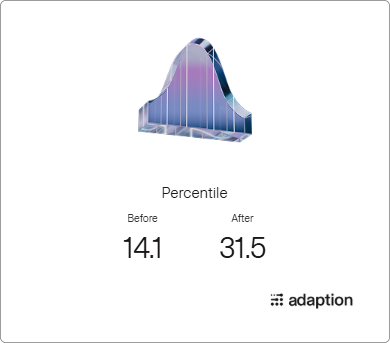
Quality Gains:
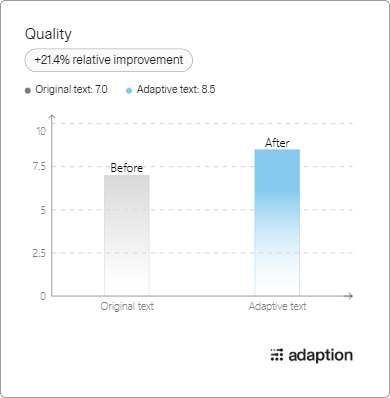
Grade Improvement:

Percentile Chart:
- Downloads last month
- 13